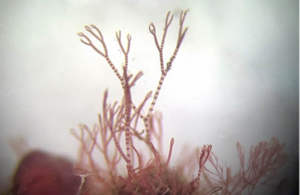
Underwater surveys of maerl beds off the south coast of Cornwall have uncovered rare and scientifically important seaweeds, including a species confirmed as new to science.
Natural England said divers brought living fragments of a tiny red Ceramium, or pincer weed, to the surface, allowing scientists to grow it in a laboratory and sequence its DNA for the first time. The seaweed is only a few millimetres across.
The surveys also recorded Ulva rigida, a green sea lettuce not previously confirmed in the UK; Neofolia rosea, or little rosy tongue weed, found only once before in the UK at the same site; and Bonnemaisonia clavata, a delicate red seaweed last seen in British waters in the 18th century.
Natural England said the findings show the biodiversity found around the coastline and the importance of Cornwall’s marine landscapes. It said the vast majority of England’s maerl beds are in Cornwall.
Maerl beds are formed by slow-growing, coral-like red seaweed and are among the most biodiverse shallow-water habitats in the north-east Atlantic. They provide nursery grounds and shelter for a wide range of marine life and also help lock away carbon in sediments.
The work followed initial reports from citizen scientist divers on the Seasearch project. Natural England’s surveys in 2023 and 2024 led to the discovery of extensive previously unknown maerl beds off England’s south coast.