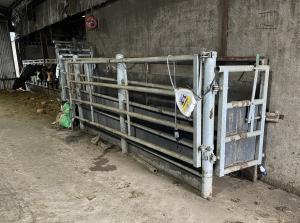
Farmers are being urged to review whether their cattle handling facilities are safe and suitable for routine work. Regina McBennett, Beef and Sheep Adviser at the College of Agriculture, Food and Rural Enterprise, said safe cattle handling starts with good facilities.
CAFRE said every livestock enterprise depends on safe and effective handling facilities for tasks such as vaccinations, dosing, pregnancy scanning, TB testing, weighing and loading stock. The advice highlights the role of well-designed systems in reducing labour requirements, improving animal welfare and lowering the risk of injury to livestock and operators.
According to the department, research continues to improve understanding of livestock behaviour and handling. Modern facilities can be designed or adapted to make routine tasks safer and less stressful for both animals and people. A handling system should be safe, robust and purpose-built, or suitably modified, for livestock restraint.
CAFRE said planning how animals move from entry to exit is essential so that tasks can be carried out efficiently while protecting the farmer and anyone assisting. Ms McBennett said she had seen significant improvements in cattle handling facilities during her time as an adviser, while noting that no single design will suit every farm.
The advice says modern facilities should, where possible, provide access to both sides of the animal or include a safe working platform allowing operators to reach across when needed. It also points to the work of animal behaviour specialist Dr Temple Grandin, whose work has shown the benefits of full-access crushes.
CAFRE said existing facilities can often be improved through measures including good natural lighting, reduced noise and materials that help absorb sound. Farmers seeking further advice on safe cattle handling facilities have been directed to contact their local CAFRE adviser through a DAERA Direct office.