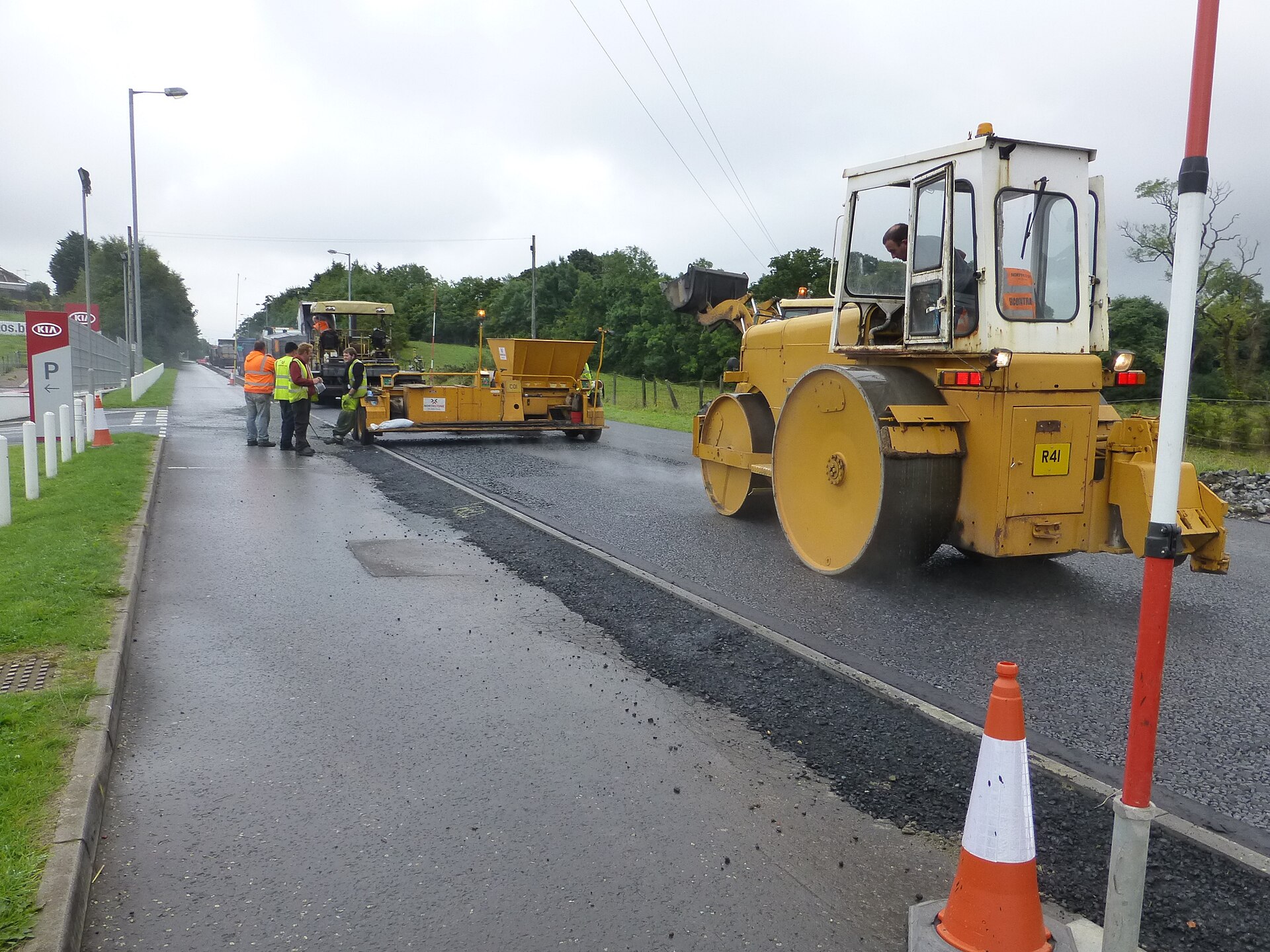
A new maintenance strategy for Northern Ireland's 26,000-kilometre public road network will place greater emphasis on preventing deterioration before more expensive reconstruction is needed. The Department for Infrastructure says future programmes will use condition data to select treatments with a longer useful life.
The approach covers resurfacing, structural repairs, drainage, verges and the monitoring needed to understand how individual routes are performing. It also brings environmental and financial measures into the same planning process, so schemes can be compared on whole-life cost rather than initial price alone.
Earlier intervention can range from sealing a surface to renewing a worn layer before water reaches the structure below. The strategy does not remove the need for major reconstruction where a road has already failed, but it aims to reduce the number of assets reaching that stage.
Technology is expected to play a larger role through improved inspection records and network-level analysis. Published condition information can help distinguish strategic routes carrying heavy traffic from local roads where access, safety and resilience are the main concerns.
The document sets direction rather than a list of immediate schemes. Annual budgets and local programmes will still determine what work proceeds in each division. Its success will ultimately be measured through condition trends, disruption, repair frequency and whether limited capital produces a more reliable network over time.